News
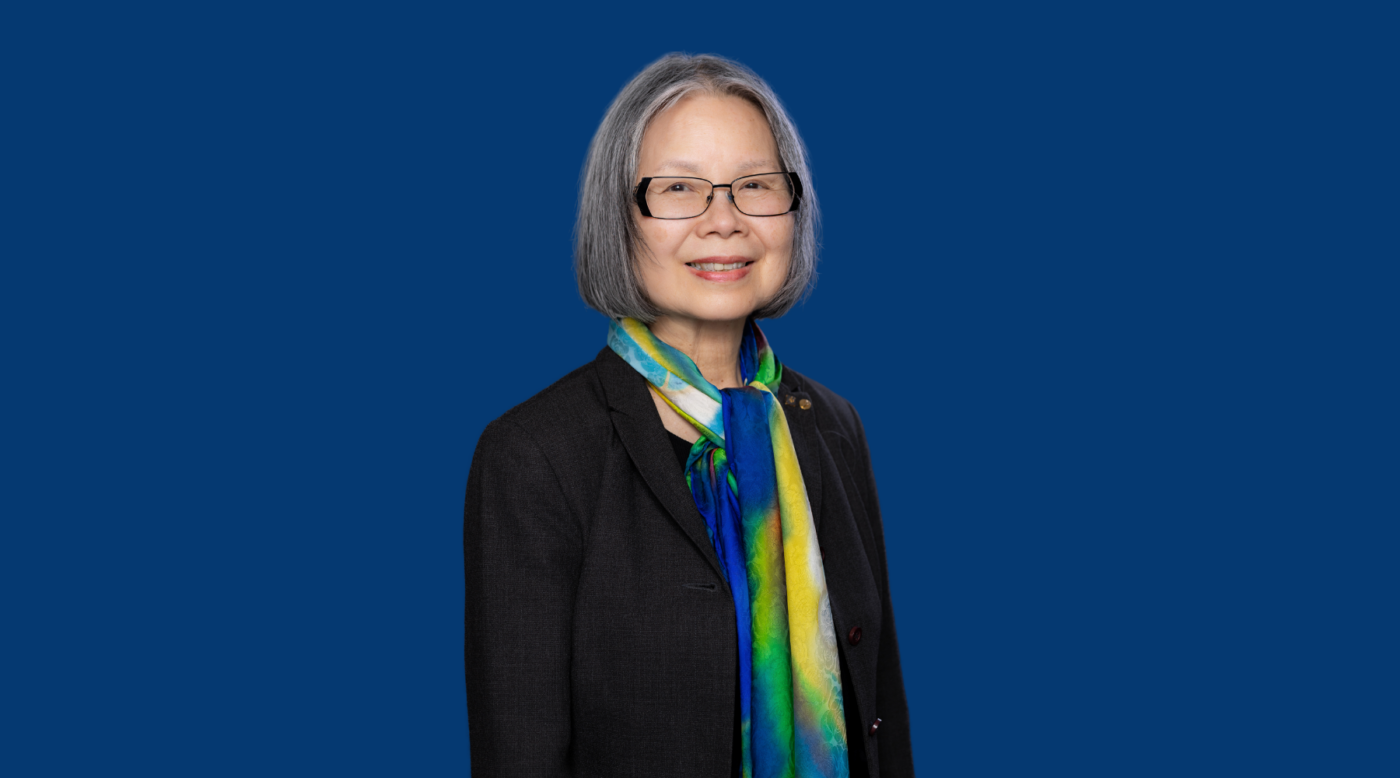
Trang Hoang, champion of human-centered scientific research
Published on February 11, 2026
At IRIC, everyone knows researcher Trang Hoang. One of the Institute’s founders, she has headed its Hematopoiesis and Leukemia Research Unit since 2003. Her commitment, passion and talent for collaboration have benefited multiple generations of researchers and students over the years. On this International Day of Women and Girls in Science, let’s take a moment to shine a spotlight on the career of this trailblazer.
A pioneer who dreams big
In 1986, Trang Hoang was recruited by the Université de Montréal (UdeM) as a professor in the Department of Pharmacology and Physiology and as the first female laboratory director at the Montreal Clinical Research Institute (IRCM), a leading Montreal-based health research center. This first notable recruitment was soon followed by the hiring of three other women as lab directors at the IRCM, demonstrating the open-mindedness of the director at the time, Professor Michel Chrétien.
At the IRCM, Professor Hoang quickly joined forces with the institution’s vision of cutting-edge research, helping to establish several research support structures. These included a specific pathogen-free animal facility, flow cytometry and bioimaging platforms, all of which facilitated and accelerated the work of researchers.
Building on these early years of her career in a high-level research environment, Trang Hoang wants to accelerate high-impact discoveries in cancer research. Together with fellow researchers, Trang Hoang envisions a cancer research institute based on collaboration and a wide range of expertises, as well as cutting-edge infrastructure, links with the clinical community, and a research continuum that bridges the gap between student training and scientific discovery to therapeutic solutions.
It was under the leadership of this group that the IRIC was founded in 2003 on the campus of the Université de Montréal, supported by the team of Rector Robert Lacroix, with the threefold mission of training the next generation, elucidating the causes of cancer, and accelerating the development of new therapies.
Barely two decades later, notable successes such as the UM171 cell therapy, now approved in Europe, and the start of clinical trials for therapeutic vaccines and therapies for solid tumors confirm that the IRIC model established by Professor Hoang and her colleagues is already having a tangible impact on patients.
A career dedicated to developing less invasive treatments
This desire to make a difference in cancer research is very much alive in Hoang’s laboratory. Her team discovered the abnormal stem cells that cause acute lymphoblastic leukemia (ALL), the most common cancer in children. Trang Hoang and her team are now seeking to identify vulnerabilities in these pre-leukemic stem cells that can be exploited therapeutically.
Teaching at the heart of her mission
Mentoring and coaching are present in virtually every facet of Trang Hoang’s roles as a professor and researcher. Whether working with students or less experienced colleagues, Professor Hoang spares no effort or time in supporting the next generation.
From the beginning of her career, Professor Hoang has focused on training the future generation by creating a science day entirely dedicated to students. Oral and poster presentations, co-chairing sessions, awards: this day offers a variety of learning opportunities for students. The event has benefited many young scientists who are now pursuing successful careers.
Professor Hoang’s drive to advance education continues through her involvement in reforming the UdeM’s graduate program in molecular biology. Focused on research, this program offered laboratory-based training. Firmly believing in the potential of such training, Trang Hoang brought together centers, institutes, and departments around a common vision: a multi-center program with courses redesigned to reflect the needs of research. This collaborative effort led to the establishment of the first multidisciplinary program in Quebec. “It is thanks to Trang’s vision, determination, and sustained commitment that the UdeM’s graduate program in molecular biology has developed and continues to thrive today,” says Marc Therrien, principal investigator and CEO of IRIC, who was also part of the Institute’s founding group.
Trang Hoang then directed this program for more than 15 years. An ardent advocate of multidisciplinary research, she also helped integrate the first systems biology training curriculum in Quebec into the program. “The master’s and doctoral program in molecular biology remains one of the most popular among our student population to this day,” says Julie Lessard, principal investigator at IRIC.
“The IRIC’s early-career researcher mentoring committee, developed by Trang, is another eloquent illustration of her commitment to the next generation,” adds Michel Bouvier, principal investigator at IRIC. Designed to support new researchers, this committee facilitates their integration, the establishment of their laboratories, and their academic progress. “Trang has also been very proactive in developing IRIC’s Academic Affairs Office,” adds Sylvain Meloche, principal investigator and founding member of IRIC.
Her contribution thus played a central role in turning ideas into sustainable structures for student support and career guidance, both at IRIC and UdeM. “As much as research, I am convinced that her dedication to the next generation is a true vocation,” says Julie Mantovani, Principal Academic Advisor at UdeM. “She is committed to passing on her love of research and doing everything she can to help students and colleagues reach their full potential.”
Innovating by building bridges
To accomplish all these large-scale projects, her peers agree on two key ingredients in Trang Hoang’s “recipe”: innovation and collaboration. “She is the most energetic person I have ever worked with professionally,” says Julie Mantovani. “Trang is never satisfied with the status quo; she is constantly looking for ways to improve.”
“Trang has a rare talent for bringing people together and uniting them,” adds Guy Sauvageau, principal investigator and founding member of IRIC. “She has a keen understanding of scientific, institutional, and human issues, which enables her to build lasting collaborations between researchers, clinicians, institutional partners, and external organizations. Her liaison work has a concrete and structuring impact.”
It is Trang Hoang’s ability to bring people together that has given rise to so many initiatives. “Trang has an exceptional ability to bring people together around a common vision and get them to work together constructively and effectively,” adds Marc Therrien. “She knows how to build lasting bridges between individuals, teams and disciplines, always in a spirit of collaboration and mutual respect.”
An inspiration to all
Several colleagues highlight the positive influence Trang Hoang has had on them personally, but also on the entire research ecosystem. “Beyond her scientific leadership, Trang also plays a major role as a role model for young women scientists in our community,” says Guy Sauvageau. “Through her career path, her calm leadership, and her intellectual rigor, she has inspired, and continues to inspire, many students and young researchers.” This was particularly true for Julie Lessard: “Trang was the chair of my thesis committee; she had a definite influence on the start of my scientific career.”
According to Marc Therrien, this ability to inspire also extends to her male colleagues: “Trang remains for many of us a source of wisdom, inspiration, and a model of commitment to science.”
Julie Mantovani learned perseverance and tenacity from Trang Hoang: “Thanks to her, I understood that you can move mountains! If the idea or project is worthwhile, no limit can hold it back… all it takes is for everyone to work together to achieve the goals. ”
“Trang is a true builder, in the noblest sense of the word,” concludes Guy Sauvageau. “She combines scientific excellence, institutional awareness and human commitment with great humility. Her impact has had a decisive influence on IRIC and its culture—and continues to have a lasting influence on our community.”